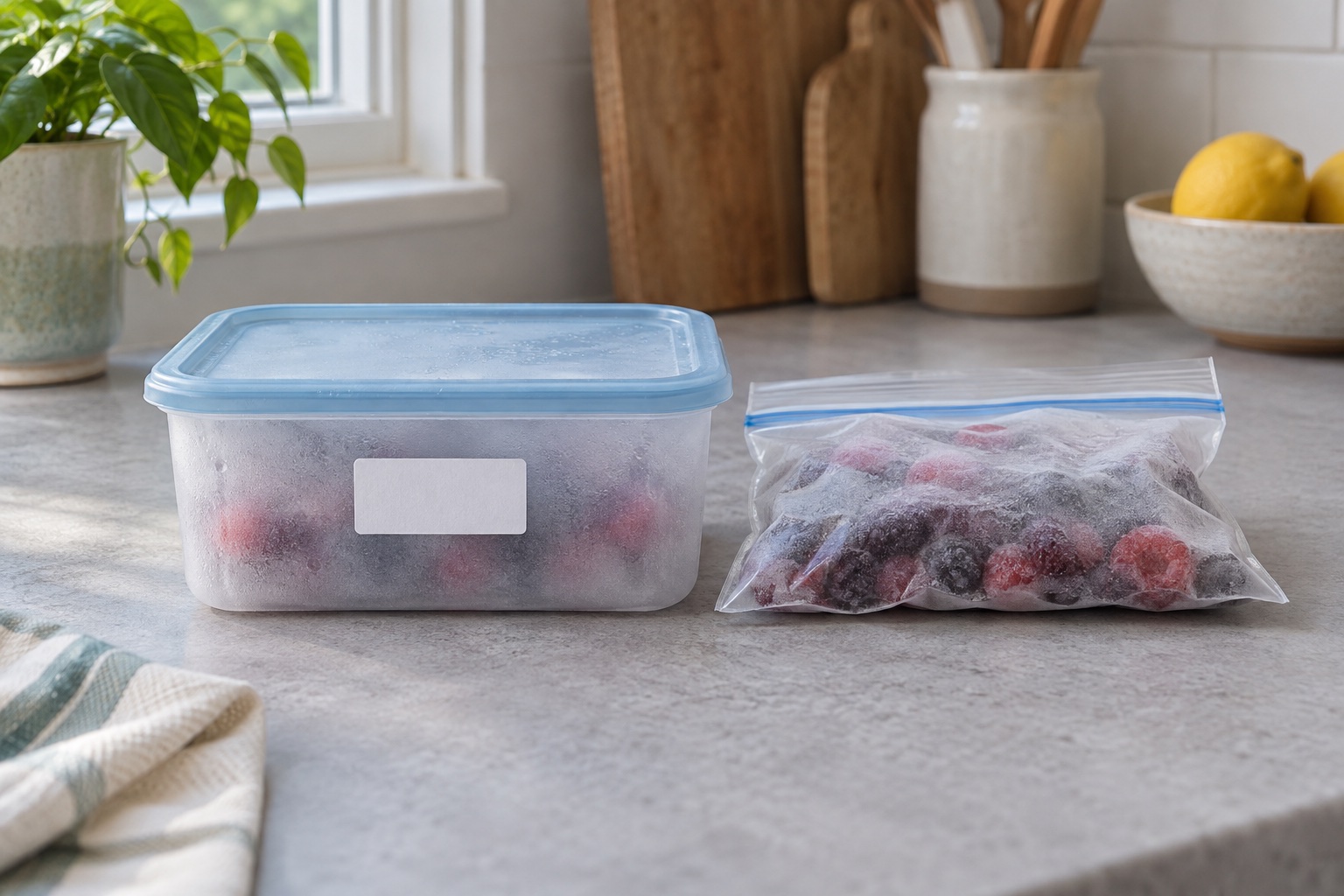
Separate the application temperature from the freezer temperature
An adhesive has to make contact with the surface when you apply it and keep its grip after the surface gets cold. The minimum application temperature tells you how cold the surface can be when the label first goes on. The service temperature describes conditions the label is intended to withstand once it has bonded.
A freezer rating answers the second question. Look for a separate application limit if you need to label something cold. If the maker publishes only a service rating, use dry packaging within the application conditions the maker describes. For a household freezer, the Food Standards Agency recommends around −18°C. Use that as context when comparing tape specifications and check the actual conditions where the label will be used.
Choose a format for the surface you will label
| Where the label goes | What to look for | What to check before using a batch |
|---|---|---|
| Smooth rigid freezer box | A cold-rated label for the exterior material | Check the plastic type and whether you need to remove the label later |
| Flexible freezer bag | A freezer label specified for bags | Pick a smooth patch away from seams and folds |
| Freezer drawer or bin | A readable label with a suitable cold rating | Check whether the drawer can be labelled empty and dry |
| Frosted or already frozen packaging | A product specified for cold application | Check the application limit and any moisture restrictions |
| Reusable outer container for stock rotation | A label with a documented removal method | Try one cycle on that surface before relying on it |
Think about how you will read the label after stacking the containers. A short name on the front of a rigid box can be easier to see than a long label on its lid. For a bag, leave enough space to write clearly without covering the seal. Place the adhesive on the outside of the packaging.
Use a purpose-made handwritten label for bags and boxes
Avery’s CONG24.UK has 24 handwritten labels measuring 63.5 × 33 mm. Avery specifies it for identifying plastic boxes and frozen bags, with a low-temperature adhesive rated to −20°C. Avery expressly says to avoid putting it onto a defrosting item. Its product page does not give a numeric minimum application temperature.
Use the writable area for the contents and date, then put the label on a clean, dry part of the bag or box before freezing. If the bag is narrow, measure the flat panel so you can place the whole sticker without crossing a crease. Follow the manufacturer’s application and removal instructions if you plan to reuse the container.
Handwritten freezer labels
Avery CONG24.UK freezer labels
A pack of 24 self-adhesive labels for identifying the outside of freezer bags and plastic boxes. The 63.5 × 33 mm writing area has room for a contents name and date.
Keep in mind. Avery rates the label to −20°C in use and says to avoid applying it to defrosting items. Apply to suitable clean, dry packaging and check the application conditions separately.
- 63.5 × 33 mm
- 24 labels
- Handwriting format
- Rated to −20°C in use
Consider laminated tape for a repeatable label on a rigid surface
If you already have a P-touch machine, you can print a short trial label on compatible laminated tape for an exterior drawer or rigid box. Brother tested its laminated labels by applying them to stainless steel at room temperature and then exposing them to cold. It reported no noticeable change in adhesive or colour after 72 hours at −80°C in that test. That result describes a particular substrate, application condition and exposure time.
A standard cassette such as the 12 mm TZe-231 prints a compact, legible label on compatible machines. For a specific freezer job, assess the actual surface before buying a roll for the whole batch. A thin bag that flexes or a textured plastic lid gives the adhesive a different surface from the stainless steel in Brother’s test.
Prepare the empty packaging and check one label
- Choose the spot you can read in the drawer. Avoid seams, embossed markings, rounded corners and ridges where the label would have to bridge a gap.
- Follow the container maker’s cleaning instructions and dry the exterior. Use a room-temperature empty box or bag where the label instructions require warm, dry application.
- Write or print a short contents name and the date frozen. If you are using several identical boxes, check the label against the contents as you close each one.
- Press the label from the centre out and check both edges. If the manufacturer specifies a time for the bond to settle before cold exposure, follow it.
- Try one on a sample container and check it after ordinary use. Look for lifted corners, faded writing and any residue if removal matters.
If an already frozen pack has lost its label, keep the food frozen while you sort out its identification. Consider labelling a suitable clean, dry outer pack or keeping a note by drawer or container position. A product intended for low-temperature application is a separate purchase from a label whose service rating happens to be low.
Manufacturer and household freezer guidance
Checked in November 2026.
Common questions
Can I stick a freezer label onto a box straight from the freezer?
Check the exact product’s minimum application temperature and moisture requirements. A label rated for cold storage after application may need to be put on warmer, dry packaging. Avery says its CONG24.UK labels are unsuitable for defrosting items.
What temperature should a freezer label cope with?
Compare the maker’s stated service temperature with the coldest conditions the label will see. The Food Standards Agency says a domestic freezer should be around −18°C. Avery rates CONG24.UK labels to −20°C in use.
Can I use Brother TZe-231 in the freezer?
Brother reports a cold exposure test for laminated tapes on stainless steel, after applying them at room temperature. For a rigid container, test an exterior sample on the actual material. Use purpose-made freezer stock where you need documented compatibility with a bag or box.
Why does a label fall off even though it says freezer proof?
Check the application conditions first. Condensation, frost, a crease or the wrong adhesive for the packaging can interfere with the bond. Use a flat, dry area and follow the pack’s surface and application guidance.
What should I write on the label?
Use a clear contents name and the date you froze it. Add a portion count if it helps you find the right pack. Keep the original packaging’s storage and cooking instructions available.